Mini Champions
Mobile SideBar
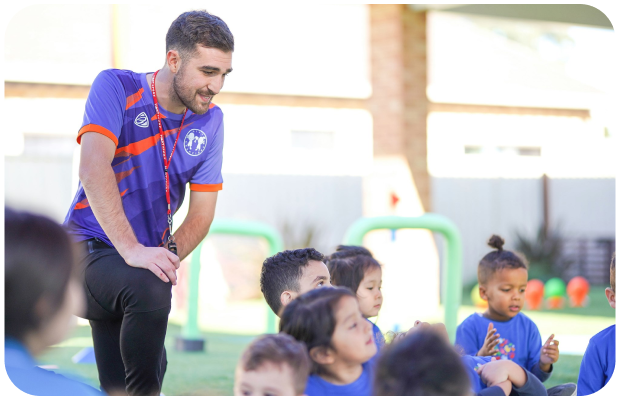
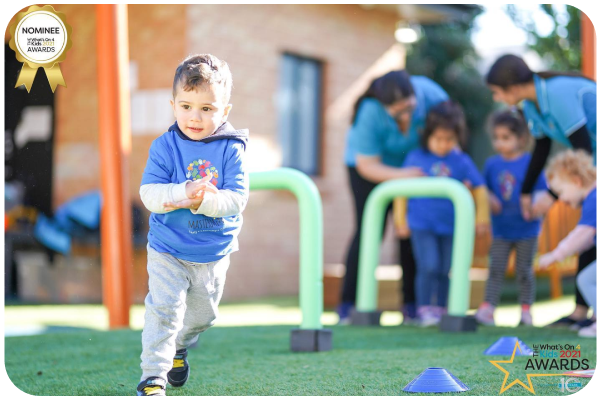
Coach engaging children in a group activityYoung child participating in outdoor running activity, promoting healthy habits.
Mindset & Body
StarIcon
With mind & body being a fundamental part of the curriculum; one of our key components in our educational sports program is for children’s well being. We want to encourage and show children the benefits of  healthy eating, fitness and applying a positive mindset. 
With different sports each week and nutrition learning games, children will be involved in a fun,safe sporting environment that focuses on their fundamental movements, healthy eating habits and mindset.

This link to the EYLF outcome 1 – Children have a strong sense of identity
BulletMarkdownChildren feel safe, secure and supported
BulletMarkdownChildren develop their emerging autonomy,interdependence, resilience and sense of agency
BulletMarkdownChildren develop knowledgeable and confident self identities
BulletMarkdownChildren learn to interact in relation to others with care, empathy and respect
This also links to the EYLF outcome 3 – Children have a strong sense of well being
BulletMarkdownChildren become strong in both their social and emotional well being
BulletMarkdownChildren take increasing responsibility for their own health and physical well being
BronzeRibbon
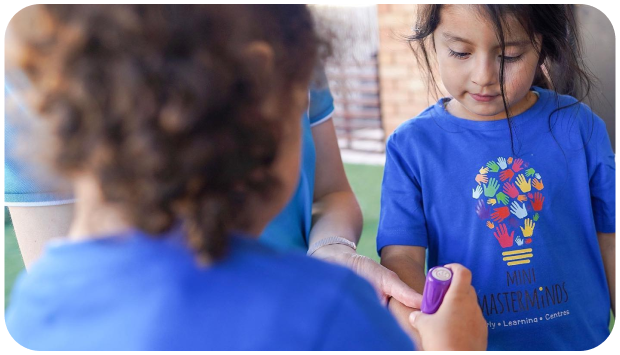
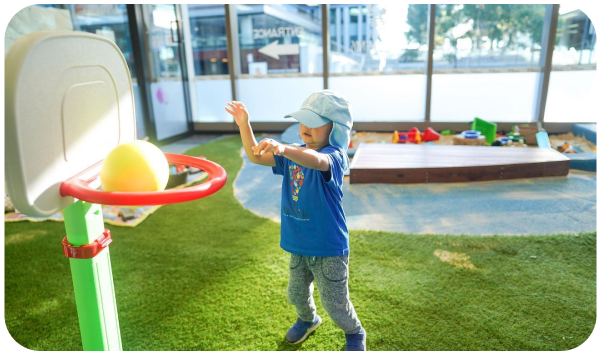
Children collaborating on learning tasks in a group setting.Child practicing basketball skills as part of a community sports program.
Education & Community
ABCPencil
With education and social skills being embedded in the curriculum, another key component in our educational sports program is for children’s development in their academic, creativity and social skills 
While children are learning a specific skill within a sport, they are also encouraged to dance, identify letters of the alphabet, recognize different sight words and uncover different sha pes, colours, and numbers. Children are directed to the relevant section of their ‘Mini Champions Readiness Handbook’ to recount their learning experiences.

Within these learning experiences, children are in a safe and fun environment where they are taught how to interact with each other and the community with respect and fairness. Children are also taught how to work and help each other out when proposed with a hard question or problem in relation to peers, the community, nutrition, literacy or mathematics.  

This links to the EYLF outcome 4 – Children are confident and involved learners
BulletMarkdownChildren develop dispositions for learning such as curiosity, cooperation, confidence, creativity, commitment, enthusiasm, persistence, imagination and reflexivity. 
BulletMarkdownChildren develop a range of skills and processes such as problem solving, enquiry, experimentation, hypothesising, researching and investigating
BulletMarkdownChildren transfer and adapt what they have learned from one context to another
BulletMarkdownChildren resource their own learning through connecting with people, place, technologies, and natural and processed materials
This links to the EYLF outcome 2 – Children are connected with and contribute to their world
BulletMarkdownChildren develop a sense of belonging to groups and communities and an understanding of the reciprocal rights and responsibilities necessary for active community participation
BulletMarkdownChildren respond to diversity with respect
BulletMarkdownChildren become aware of fairness
BulletMarkdownChildren become socially responsible and show respect for the environment 
Rocket